


Drones for Wedding Photography: Master Aerial Moments in 2026

Using drones for wedding photography does more than just get a camera in the air—it adds an entirely new dimension to your work. It's the difference between a beautiful, standard photo and a sweeping, epic shot that captures the full scale of a stunning venue, a dramatic coastline, or an emotional group photo where every guest is perfectly in frame. A drone is far more than a flying camera; it's a powerful storytelling tool.
Transform Your Weddings With Cinematic Aerial Views

Think about the limitations of traditional, ground-based shooting. While your standard cameras capture the intimate tears and smiles, they often can't convey the full context and grandeur of the wedding day. This is where drones for wedding photography really make their mark, offering a perspective once reserved only for big-budget film productions.
Think of it this way: your handheld camera is like a portrait artist, zeroing in on fine details and raw emotion. A drone, on the other hand, is the landscape painter, capturing the entire scene in all its glory. It adds a layer of production value that can elevate your entire portfolio and leave clients completely stunned.
Elevate Your Storytelling
Adding aerial views to your services allows you to tell a much more complete and compelling story. Instead of just showing the couple, you can pull back to reveal their incredible venue in a single, dramatic shot. This builds anticipation and establishes a powerful sense of place that ground-level photos simply can't replicate.
Suddenly, you can capture moments that were previously impossible, such as:
A "top-down" group shot with hundreds of guests arranged into a heart shape.
The couple enjoying a solitary walk along a pristine beach or through a towering forest.
An "orbit" shot that circles the couple during their portraits, wrapping them in the epic scenery.
A drone isn't just another accessory; it's a new narrative device. You can use it to create a powerful opening scene for a wedding film or that one signature "wow" shot for an album that immediately sets a luxurious, cinematic tone.
By mastering drone photography, you aren't just taking pictures from a higher angle. You're crafting a visual legacy that feels grand, expansive, and deeply romantic. This guide is your complete roadmap to safely, legally, and creatively adding this incredible service to your business, turning unforgettable moments into timeless aerial masterpieces.
Choosing the Right Drone for Wedding Photography
Picking the right drone for your wedding business is a big deal. It's just as crucial as choosing a new camera body or your go-to lens. The right drone can unlock incredible creative shots, but the wrong one can be a liability, creating headaches on an already high-stress day.
This isn't just about flight time or megapixels. You need to think about the unique demands of a wedding. These are fast-moving, emotional events that demand both top-tier quality and absolute discretion. Your drone isn't just a gadget; it's your eye in the sky, and it has to be quiet, reliable, and produce images that truly wow your clients.
Image Quality Above All Else
When it comes down to it, the camera's sensor size is the most critical factor. Many consumer drones have impressive video specs, but for professional-grade photos, a larger sensor is a must. A drone with a 1-inch sensor or a Micro Four Thirds (MFT) sensor is the baseline for professional work.
Why does this matter so much? A bigger sensor simply drinks in more light. That translates directly to a few key advantages:
Better low-light performance: This is non-negotiable for capturing those dreamy golden hour portraits or moody dusk scenes without ugly digital noise.
Greater dynamic range: You’ll be able to hold onto the details in the brightest parts of a wedding dress and the darkest shadows of the landscape, all in a single shot.
Richer colors and detail: Larger sensors give you files with more data and depth, making it far easier to edit and match the look of your ground cameras.
A drone with a small sensor might look okay on a phone, but the lack of quality becomes painfully obvious when a client wants a large print. Investing in a better sensor from the start ensures your aerial work has the professional polish your brand depends on.
Discretion and Safety Features
A wedding is an intimate affair. Your presence, whether on the ground or in the air, needs to be as unobtrusive as possible. Two features are absolutely vital for this: quiet propellers and solid obstacle avoidance.
Most modern drones offer low-noise propellers, and you should consider them essential. No drone is truly silent, but these specialized props dial back the annoying high-pitched whine to a much more manageable hum. This lets you fly without ruining a quiet ceremony or peaceful cocktail hour.
On top of that, a robust obstacle avoidance system is your best friend. Wedding venues are full of surprises—old trees, complex architecture, and other things you don't want to hit. A drone with multi-directional sensors gives you the confidence to fly in tight spots, knowing it can spot and avoid a potential crash. This tech protects your gear and, more importantly, everyone at the event.
Choosing a drone with advanced obstacle avoidance is like having a dedicated spotter for your aerial operations. It allows you to focus more on framing the perfect shot and less on worrying about environmental hazards, which is crucial in a high-pressure wedding setting.
Finding the Right Balance
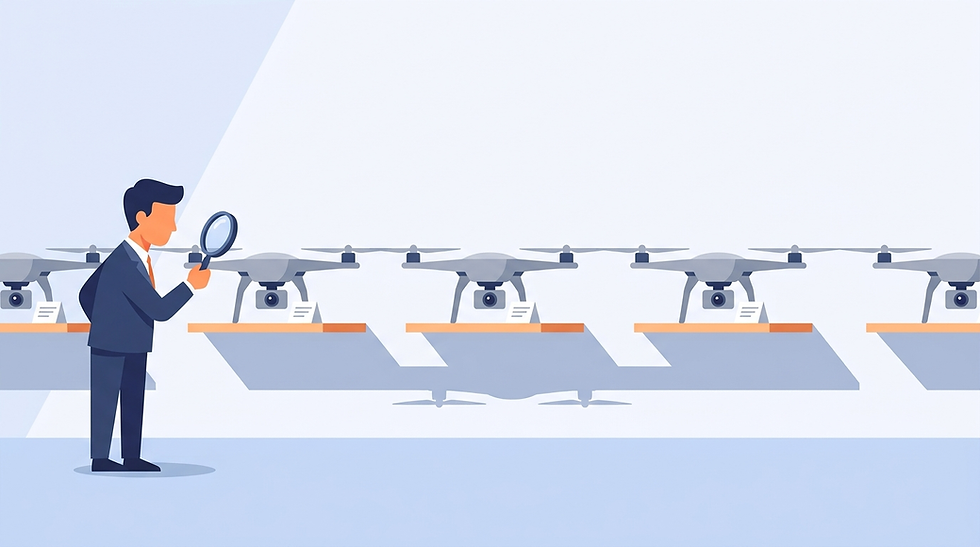
When you start looking at drones for wedding photography, you'll see a trade-off between larger, flagship models and smaller, more portable options. To get a better feel for specific models, you can learn more about the best drones for aerial photography in our detailed guide.
First, let’s break down what really matters for wedding work in a simple table.
Essential Drone Features for Wedding Photographers
Feature | What To Look For | Why It Matters for Weddings |
|---|---|---|
Camera Sensor | 1-inch or Micro Four Thirds (MFT) | Delivers superior image quality, better low-light performance, and wider dynamic range for professional results. |
Noise Level | Low-noise propeller design | Ensures you can operate discreetly without disrupting quiet, intimate moments like the vows or speeches. |
Obstacle Avoidance | 360-degree or multi-directional sensors | Provides critical safety when flying in complex venues with trees, buildings, and other potential hazards. |
Flight Time | 30+ minutes per battery | Maximizes your shooting time, allowing for multiple takes and creative exploration without constant battery swaps. |
Portability | Foldable design, manageable weight | A drone that's easy to pack and carry is essential for photographers who are already managing multiple camera bags. |
Ultimately, you have to weigh your priorities. A flagship model like a DJI Mavic 3 Pro gives you unmatched image quality from its MFT sensor, but it's also heavier and more expensive. On the other hand, a more compact drone like the DJI Air series is incredibly portable and still packs a very capable 1-inch sensor, making it a fantastic all-around choice. By balancing image quality, discretion, safety, and portability, you'll find the perfect aerial partner for your business.
Flying by the Book: Wedding Drone Rules You Can't Ignore
Flying a drone at a wedding involves more than just getting a cool shot. The sky has its own rulebook, and as a professional offering drones for wedding photography, knowing it is non-negotiable. It’s about protecting your business, your clients, and every guest at the event.
Think of it this way: you wouldn't drive for a ride-sharing service without a license and insurance. The same exact principle applies to the air. Operating commercially without the right credentials is a massive risk, one that can lead to steep fines and tank your reputation before you even get off the ground.
Your Ticket to Fly: The Part 107 License
For any photographer in the U.S. who plans to charge money for drone work, the first and most important step is getting the FAA's Part 107 license. This certificate is what officially makes you a Remote Pilot, giving you the legal authority to fly a drone for commercial gigs.
Passing the Part 107 exam shows you have a solid grasp of safe and legal flight. It covers the essentials, including:
Airspace Classifications: Knowing the difference between open skies and no-fly zones, from busy airports to restricted government property.
Operating Requirements: Understanding the rules of the sky, like the standard altitude limit of 400 feet above the ground and when weather makes flying a no-go.
Flight Restrictions: Following the critical rule of always keeping your drone within your visual line of sight.
Your Part 107 license is the foundation of a professional drone business. It’s a signal to clients and venues that you are a serious, knowledgeable operator who puts safety first. It instantly separates you from the amateurs.
Having that certificate isn't just about dodging penalties; it's a key that unlocks trust. A venue manager will be much more open to letting you fly if you can show them your Remote Pilot Certificate. It’s your professional passport to the sky. Drone rules also change, so staying current is a must. For a look at what’s coming, check out our guide to Remote ID drone regulations to stay ahead of the curve.
From Rules on Paper to Real-World Weddings
Knowing the regulations is one thing, but applying them on a hectic wedding day is another challenge entirely. A huge rule under Part 107 is that you cannot fly directly over people who aren’t directly involved in the flight operation. This one rule dramatically changes how you approach wedding shoots.
It means that dreamy top-down shot of the entire ceremony with all the guests seated below? That's almost always illegal and, more importantly, unsafe. You have to get creative to work around it legally.
Here are a few ways to do it:
Shoot from an angle: Keep the drone at a safe distance and off to the side. Use a zoom lens to compress the background and create an intimate shot without ever flying overhead.
Focus on the "in-between" moments: Fly during cocktail hour when guests are spread out, or during the portrait session when it’s just you and the wedding party.
Stage the shot: You can legally fly over the wedding party for a group photo, but only if you have briefed them on the flight and they've all agreed to it beforehand.
Always, always check your airspace maps before the wedding day with an app like B4UFLY. That gorgeous countryside venue might be right next to a tiny private airstrip you’d never know was there, putting it in restricted airspace. Finding this out early lets you manage your client's expectations and come up with a solid backup plan.
Don't Fly Naked: The Need for Liability Insurance
If your Part 107 is the "driver's license" for your drone, then liability insurance is its "car insurance." It's not optional for any professional. Accidents are rare, but they can happen. A sudden gust of wind, a lost signal, or a hardware failure could send your drone into a building or, in a worst-case scenario, injure someone.
A single accident without insurance could put you out of business. You need a policy with at least $1 million in liability coverage, which is the standard that most wedding venues will require. When you shop for a policy, double-check that it specifically covers commercial drone flights—your regular business insurance almost certainly won't.
Many venues now demand a Certificate of Insurance (COI) that names them as an "additional insured." This is a standard request that protects them, the couple, and you. It’s a small price to pay for a huge layer of financial security and a non-negotiable mark of a true professional.
Mastering Iconic Aerial Wedding Shots
This is where the magic happens. Capturing incredible aerial footage is where your technical skill as a drone pilot blends with pure artistry. Once you’ve nailed the basics of flight, mastering a few signature shots is what will set your wedding films and albums apart. These are the moments that create a genuine "wow" factor, the kind of shots clients will be talking about for years.
Let's break down three of the most impactful aerial shots for weddings. Think of these as the foundational moves in your cinematic playbook, the techniques that turn a beautiful scene into an unforgettable memory.
The Dramatic Venue Reveal
The Venue Reveal is your opening scene, the shot that sets the stage for the entire day. It’s a powerful way to build anticipation and showcase the grandeur of the location in one sweeping motion. The idea is simple: start tight on a small detail and pull away to reveal the entire breathtaking scene.
Imagine starting with your drone focused on the venue's ornate front doors, then slowly flying backward and pulling up. As the drone climbs, the full estate, its perfectly manicured gardens, and the surrounding landscape unfold before the viewer's eyes. It creates a sense of discovery and scale that’s simply impossible to get from the ground.
Here’s how to nail it every time:
Start Low and Close: Find an interesting architectural feature—a fountain, an archway, or the main entrance—and begin your shot there.
Fly Backward and Upward Smoothly: This is all about slow, steady control. You want to ease the drone backward while simultaneously gaining altitude. Gentle stick movements are your best friend here; any jerky motion will ruin the effect.
Time it with Golden Hour: This shot looks its absolute best during the golden hour, that magical hour just after sunrise or before sunset. The soft, warm light will make the venue glow and bring out all its beautiful textures.
Camera Settings: For that cinematic quality, shoot in 4K or higher at 24 or 30 frames per second. Keep your ISO low to avoid noise, and use a good neutral density (ND) filter to get that perfect, smooth motion blur.
The Artistic Top-Down Portrait
The top-down shot, or "bird's-eye view," is one of the most unique perspectives a drone can offer. It takes a standard group photo and transforms it into a work of art. While you can never fly directly over unsuspecting guests, you can create some truly stunning, posed shots with the couple and their wedding party.
This is where your creativity as a director really comes into play. You can arrange the couple and their party into interesting shapes—a circle, a clean line, or even a heart. The key is to use the environment as your canvas. Look for interesting textures on the ground, like patterned stonework, a lush green lawn, or a sandy beach.
The top-down perspective strips away distracting backgrounds and focuses entirely on human connection and composition. It’s less of a photo and more of a planned graphic design, using people as the primary elements.
Before you even think about taking off, it’s essential to brief everyone. Let them know exactly what you’re doing and make sure they’re comfortable with a drone flying overhead. This is a non-negotiable step for both safety and legal reasons. Once everyone is in position, ascend slowly to about 50-100 feet directly above them, and tilt your camera straight down to 90 degrees.
The simple flowchart below outlines the professional process you must follow for every single flight. No exceptions.

Getting certified, being insured, and clearing it with the venue—this is the bedrock of professional drone work.
The Intimate Orbit Shot
The orbit is a classic cinematic move that beautifully frames the couple within their epic surroundings. The shot involves flying the drone in a perfect circle around the couple, keeping them locked in the center of the frame. It produces a dynamic, romantic shot that’s ideal for capturing them in a stunning landscape.
To pull off a smooth orbit, you need a location with plenty of room to maneuver. Think clifftops, open fields, or expansive beaches. Place the couple in the middle and fly your drone out to a good distance and altitude. The good news is that most modern drones can do the hard work for you.
Automated Orbit: Using a feature like DJI's "Point of Interest" is the surefire way to get a perfect circle. You just draw a box around the couple on your screen, set the radius and speed, and let the drone execute a flawless orbit. This is the way to go for pro-level results.
Manual Orbit: If you have to fly it by hand, it takes some serious practice. It requires a delicate balance of two stick movements at once: yawing the drone in one direction while rolling it in the opposite direction.
For the best results, give the couple some direction. Ask them to hold hands and walk slowly, share a kiss, or just look at each other. This brings genuine emotion into a technically precise shot, creating a final product that's both visually stunning and emotionally resonant. Always coordinate with the ground photography team so you can capture these moments without getting in each other's way.
Your Pre-Flight Checklist for a Perfect Wedding Shoot

When you’re providing drones for wedding photography, a successful flight doesn't happen by chance—it's the product of rigorous preparation. A live, high-stakes event is the worst possible time to find out you have a dead battery or a full SD card. Having a strict pre-flight checklist is what separates a true professional from an amateur.
This isn't just about ticking boxes; it's a routine that builds confidence and prevents surprises, much like a pilot’s own pre-flight inspection. Your preparation should start long before you ever set foot on the venue grounds, beginning with your gear at home or in the studio.
Prepare Your Gear Before You Leave
A smooth wedding day shoot begins with what’s in your bag. Your drone kit needs to be completely prepped and ready for immediate deployment, cutting down on-site setup time and eliminating obvious points of failure.
Before heading out the door, your gear check must cover these essentials:
Fully Charge Everything: Every drone battery, remote controller, and external monitor needs to be at 100% charge. Don't just assume they’re ready from your last job—check each one.
Pack Spare Batteries: Wedding days are long and unpredictable. Bring at least three to four fully charged drone batteries so you have enough power for multiple shots and any necessary re-takes.
Format Multiple Memory Cards: Always begin with fresh, newly formatted memory cards. Pack more than you think you’ll need; running out of space during a key moment is not an option.
Your pre-flight prep is your professional safety net. A simple check at home can prevent a major headache in front of a client, a wedding planner, and 150 guests. It's the disciplined routine that separates seasoned pros from amateurs.
This methodical system ensures that once you're on-site, your gear is one less thing to worry about. From there, your attention can shift to the environment itself. For a deeper dive into this process, explore our complete guide on the essential drone pre-flight checklist and safety tips.
Conduct Your On-Site Survey
As soon as you arrive at the venue, your first priority is to conduct a detailed site survey. Every location presents unique challenges and potential hazards that simply don't show up on a map. Walking the property is non-negotiable for a safe flight.
During your walkthrough, identify and mentally map out all potential obstructions. Pay close attention to tall trees, hard-to-see power lines, flagpoles, and temporary structures like event tents or gazebos. These are common culprits in drone incidents.
Next, make a point to connect with the on-site venue coordinator. This is a critical step for both professionalism and safety. Discuss your planned flight paths and collaborate to designate safe, clear zones for takeoff and landing that are away from guest traffic.
It's also crucial to confirm any property-specific rules they might have. A venue may enforce its own restrictions on where or when you can fly, independent of FAA regulations. Getting this official clearance shows respect for their policies and builds trust, ensuring your operation is smooth and professional from start to finish.
Editing Drone Photos and Video for a Cohesive Look
The work isn’t over when the drone lands. In many ways, it’s just beginning. The real art of aerial wedding coverage comes together in the edit, where you weave those breathtaking raw files into a story that feels perfectly in sync with your ground-level shots.
Your goal is simple: make the drone footage feel like a natural part of the film, not a flashy, disconnected add-on.
This process starts with a rule I live by: create immediate backups on-site. Before packing anything away, get those files off the SD card and onto at least two separate portable hard drives. A wedding day has zero room for error. Losing once-in-a-lifetime shots to a corrupt card is a nightmare you can completely sidestep with this one simple discipline.
Matching Your Aerial and Ground Cameras
The biggest post-production hurdle with drones for wedding photography is getting a consistent look. Your drone’s sensor is fundamentally different from your main DSLR or mirrorless camera, so the raw footage will always have a unique color profile and feel. The secret is to bridge that gap with meticulous color grading.
Think of it like being a painter. You might use different brushes for different parts of the canvas, but you mix all your colors from the same core palette. Your editing software—whether it's Lightroom for photos or Premiere Pro for video—is your digital palette.
Create a Unified Look: Start by applying the same base preset or LUT (Look-Up Table) you use on your ground footage to your aerial clips. This gives everything a shared foundation.
Tweak to Perfection: From there, make micro-adjustments to the drone footage's exposure, contrast, and white balance. Put it side-by-side with a reference shot from your main camera and tune it until they match.
Check Skin Tones: This is where inconsistencies scream the loudest. The couple’s skin tones need to look identical, whether in a tight portrait or a grand shot from 200 feet in the air.
If you're looking to explore different editing tools that can help with this, we’ve put together a guide on the best drone video editing software picks.
Post-production is about more than just making footage look good; it's about making it feel cohesive. Your client should experience a single, flowing visual narrative, not two different styles cut together. The transition from ground to air should be invisible.
Essential Drone-Specific Adjustments
Beyond just color, aerial footage has its own quirks that often need a bit of technical finessing. Drones typically rely on wide-angle lenses, which can introduce a subtle "fisheye" effect that bends straight lines like buildings or the horizon.
Thankfully, this is an easy fix. Most professional editing software has built-in lens correction profiles. Just find the profile for your specific drone model and apply it. With a single click, those distracting curves will straighten out, giving your shots a much more polished and professional feel.
You’ll also want to look for tiny jitters. Even on a calm day, micro-vibrations or a sudden gust of wind can sneak into your video. Applying a touch of software stabilization can smooth these out for that buttery, cinematic look. A word of caution: use a light hand. Overdoing it can create bizarre warping effects that are more distracting than the original shake.
Once your incredible footage is perfected, an important final step is efficiently collecting wedding photos from every source to deliver a complete and beautiful album for the couple.
Common Questions About Drones for Wedding Photography
When you start talking about adding a drone to a wedding package, both clients and photographers have plenty of questions. It's totally understandable. Getting these concerns addressed right from the start is the best way to manage expectations and make sure everything goes off without a hitch. Let's walk through some of the most common ones.
Can We Fly the Drone Anywhere at the Venue?
The simple answer is no. You absolutely must get explicit, written permission from the venue's management well before the wedding day. Many places, especially those near airports, inside national parks, or in crowded city centers, have strict no-fly zones for very good safety and privacy reasons.
On top of that, a professional pilot will always conduct a thorough site survey to check for local flight restrictions or any potential hazards. This prep work ensures every flight is legal and safe, which protects the couple, their guests, and the venue's property.
What Is the Plan for Bad Weather?
Safety is non-negotiable. Drones simply can't fly safely in rain, high winds, or other dicey weather conditions. Your client contract needs to be crystal clear that all drone operations are weather-dependent and ultimately up to the pilot's professional judgment.
It’s smart to have a backup plan discussed and agreed upon ahead of time. This might look like:
Waiting for a break in the weather later in the day.
Pivoting to focus entirely on ground-based photos and video.
Offering a partial refund for the drone services if flying just isn't possible.
A true professional will never put people or equipment at risk by flying in unsafe conditions. A clear weather contingency plan in your contract protects you and the client from any last-minute disappointment and sets a realistic tone from the beginning.
Will the Drone Be Noisy and Disruptive?
Today’s professional drones are much quieter than you might think, but they do make a distinct humming sound. As a professional, the rule is simple: never fly during quiet, intimate moments like the ceremony or vows. Flights have to be planned for times when a little background noise won't even be noticed.
The best opportunities for drone shots are usually during the couple’s portrait session, the high-energy cocktail hour, or when gathering everyone for big group photos. This approach gets you those incredible aerial views without stepping on the toes of the guest experience.
Once you have all that amazing aerial footage, the real magic happens in the edit. Knowing how to create a highlight reel that stands out is key to weaving those epic shots into a story that the couple will cherish forever.
At JAB Drone, we're dedicated to helping you master every aspect of aerial photography. Explore our expert guides and reviews to take your skills to the next level. Find your next drone at https://www.jabdrone.com.
Comments