


Drone for Wedding Photography Guide

Updated: Sep 14, 2025
Not too long ago, the idea of using a drone for wedding photography felt like something out of a sci-fi movie. Now, it’s become a core part of how we tell a couple's story. It gives us this incredible ability to capture the sheer scale and feeling of a wedding day, offering cinematic views that were once completely out of reach. This isn't just a gimmick; it’s a tool that adds a profound layer of emotional depth and context, turning a great wedding album into a truly unforgettable one.
Why Drone Photography Is Reshaping Wedding Storytelling
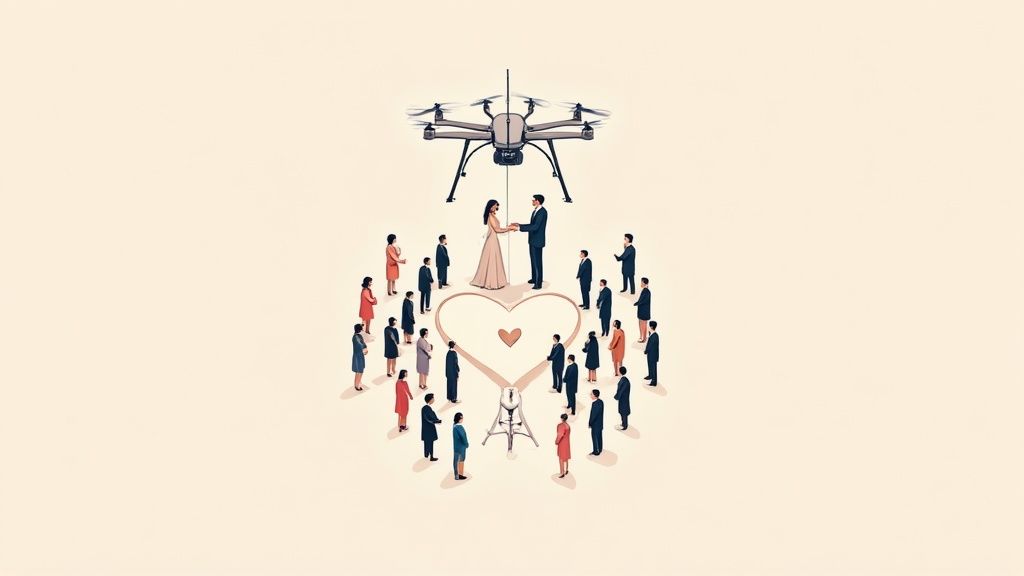
Think about the opening scene of a great film. It sets the stage. A drone shot does the same for a wedding album, starting not with a tight close-up, but with a breathtaking sweep over the venue as guests find their seats. That’s the magic of aerial photography—it’s not just about getting a high-angle shot, it’s about crafting a complete visual narrative from the very beginning.
A drone acts like a master narrator, establishing the scene and providing context that you just can't get from the ground. It beautifully captures the relationship between the couple, their loved ones, and the incredible environment they chose for their big day. This perspective is what elevates a collection of moments into a cohesive, cinematic story.
Capturing the Full Scope of the Celebration
Traditional, on-the-ground photography will always be king for capturing those intimate emotions—the knowing glance, the shared laugh, the tearful vow. A drone doesn't replace that. It complements it by capturing the collective energy and grand scale of the day.
Venue Appreciation: You can finally do justice to that historic estate, stunning beachfront resort, or rustic barn the couple spent months picking out.
Unique Group Shots: Forget trying to herd everyone onto a staircase. From above, you can create perfectly symmetrical, visually striking group photos that are impossible to orchestrate otherwise.
Cinematic Transitions: Use sweeping aerial clips to fluidly connect different parts of the day, like the journey from the ceremony to the reception.
This ability to weave together intimate details with grand, sweeping visuals is what defines modern wedding storytelling. It’s how you deliver those jaw-dropping "wow" moments that couples will be excited to share for years. As you watch how photography evolves, you'll see aerial shots becoming more central to evolving wedding trends.
To give you a quick snapshot, here’s how I think about the pros and the necessary precautions when bringing a drone into the mix.
Drone Wedding Photography At a Glance
Key Benefit | Primary Consideration |
|---|---|
Cinematic Storytelling | Weather Dependence |
Unique Perspectives | Venue & Airspace Rules |
Showcasing the Venue | Noise & Distractions |
Epic Group Photos | Pilot Skill & Licensing |
Essentially, the payoff is massive, but it comes with a responsibility to be prepared, professional, and aware of your surroundings.
The Growing Demand for Aerial Perspectives
This isn't just a creative fad; it's a market that's absolutely exploding. The drone wedding photography market was valued at around USD 2.8 billion in 2023 and is projected to hit nearly USD 8.6 billion by 2032. What's driving this? The technology has gotten so much better—higher resolution cameras, longer flight times, and incredible stabilization—making professional-grade aerial shots more accessible for photographers everywhere.
By incorporating a drone for wedding photography, you are not just adding a new angle; you are fundamentally enhancing the emotional impact of the final story. It’s the difference between showing a single chapter and revealing the entire epic.
Ultimately, flying a drone on a wedding day is about delivering a more complete and emotionally powerful final product. It’s the key to transforming a beautiful wedding gallery into a cinematic experience they'll never forget.
Choosing the Right Drone for Your Photography Business
Picking the right drone is a lot like picking the right lens for a shoot. It's not about chasing the latest tech, but about finding a creative partner that you can rely on. A great drone for wedding photography should feel like an extension of your own eye, a tool that works with you, not against you. The market is crowded, but for wedding pros, the choice really comes down to a few key features that make or break the final product and the client experience.
Think of your drone's camera as your main lens, just one that happens to fly. You wouldn't show up to a high-end wedding with a basic kit lens, right? The same logic applies here. The little details in the camera are what elevate your work from hobbyist footage to the kind of breathtaking, cinematic shots clients are happy to pay a premium for.
The Heart Of The Image: Camera Quality
The camera sensor is everything. A bigger sensor—like a 1-inch or even a 4/3 sensor you’ll find in top-tier drones—is a game-changer because it pulls in more light and detail. This pays off huge in low-light situations, which is perfect for capturing those golden hour moments or moody evening receptions. It also gives you a much wider dynamic range.
Dynamic range is your secret weapon for tricky lighting. It’s what allows your camera to see the detail in the brightest whites of a wedding dress under the sun and the darkest shadows of a forest backdrop in the same shot. Without good dynamic range, you’re forced to sacrifice one for the other, leaving you with blown-out skies or crushed, muddy landscapes.
Here are the camera specs that are non-negotiable for professional work:
RAW Capability: Always shoot in RAW. It's the only way to get the maximum flexibility in post-production to fine-tune colors and exposure. This ensures your aerial shots seamlessly match the style of your photos from the ground.
High Resolution: Look for a sensor that can deliver at least 20 megapixels for your stills. This gives you plenty of room to crop in without losing quality and ensures your images look sharp even in large prints.
4K Video: Even if stills are your main focus, having crisp 4K video is a massive value-add for your wedding packages. You can create incredible hybrid videos or pull stunning clips for a highlight reel.
Stability And Smoothness: The Gimbal's Role
If the camera is the heart, the gimbal is the steady hand holding it. A 3-axis gimbal is the magic that keeps your camera perfectly level and your footage silky smooth, no matter how the drone moves. It fights against wind, vibrations, and sharp turns to make every shot look fluid and cinematic. Without one, your video will be a shaky, unusable mess that screams amateur.
A professional-grade gimbal makes your aerial footage look intentional and polished. It’s what turns a simple flyover into a graceful, sweeping reveal that feels expensive and high-end.
This rock-solid stability gives you the confidence to pull off more complex moves like orbits and reveals, knowing the final shot will be flawless.
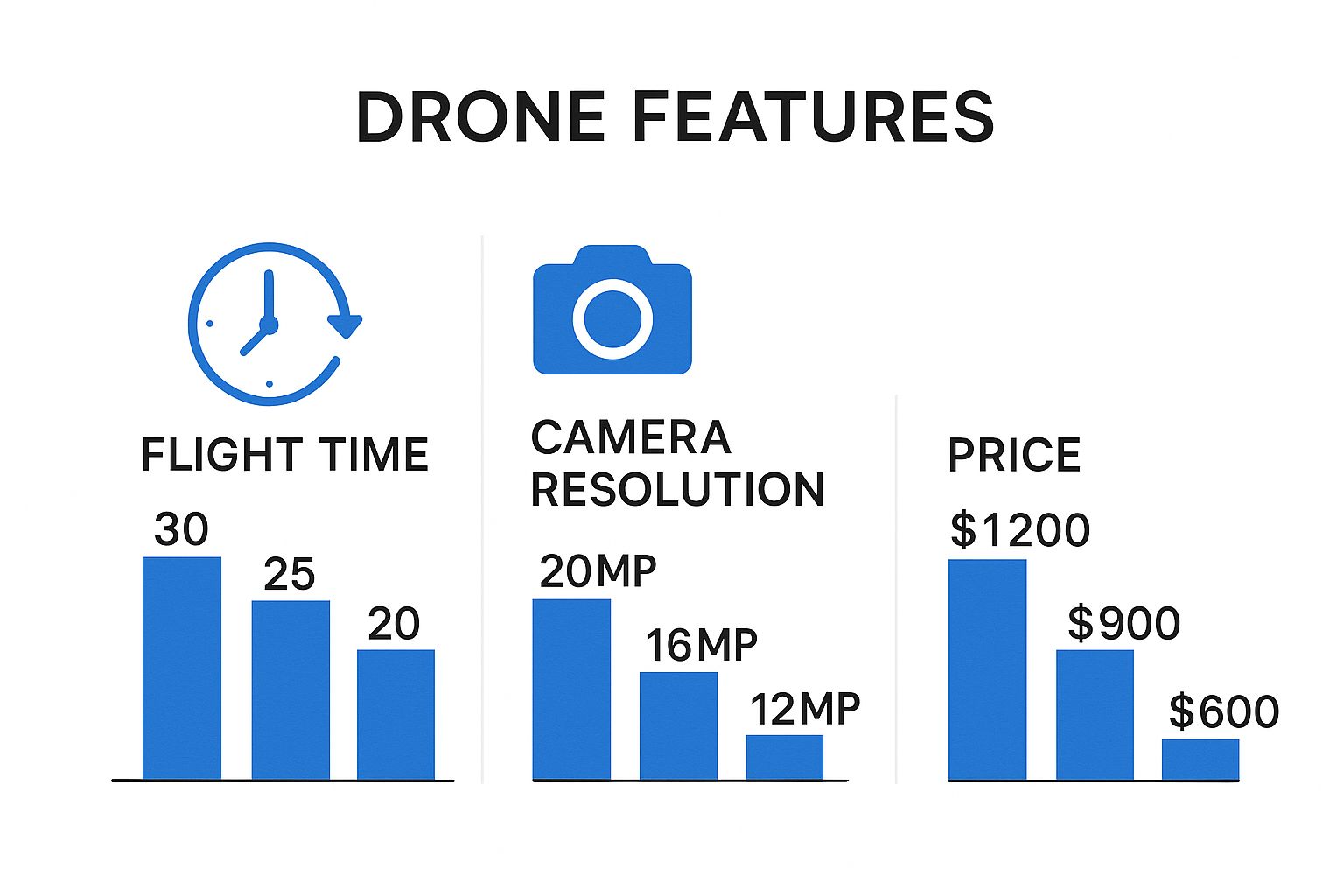
To help you navigate your options, here’s a quick comparison of what you can expect at different price points.
Essential Drone Feature Comparison for Wedding Photographers
This table breaks down the key features across different drone tiers, helping you pinpoint the right model for your business and budget.
Feature | Entry-Level Drone | Mid-Range Prosumer Drone | Professional Cinema Drone |
|---|---|---|---|
Camera Sensor | Smaller (e.g., 1/2.3") | Larger (e.g., 1-inch) | High-end (e.g., 4/3 or larger) |
Photo Resolution | 12 MP, good for web use | 20 MP+, suitable for prints | 48 MP+, for large-format printing and heavy cropping |
Video Quality | 1080p or basic 4K | High-bitrate 4K/60fps, 10-bit color | 5K+ RAW video, professional codecs (e.g., ProRes) |
Gimbal Stability | Basic 3-axis, can struggle in wind | Advanced 3-axis, very stable | Cinema-grade stabilization, flawless tracking |
Flight Time | 15-20 minutes | 30-45 minutes | 25-40 minutes (heavier payload) |
Obstacle Avoidance | Limited (front/bottom sensors) | Multi-directional (front, back, sides, up, down) | Advanced 360° sensing with predictive avoidance |
Noise Level | Can be loud and distracting | Quieter propellers and motors | Optimized for low-noise operation |
Best For | Beginners, portfolio building, very small weddings | Most professional wedding photographers, versatile and reliable | High-end cinematic productions, large-budget weddings |
As you can see, investing in a mid-range or professional drone brings significant upgrades in the areas that matter most for wedding work: image quality, stability, and flight time.
Practical Considerations For The Wedding Day
Beyond the camera gear, a few practical features will make or break your experience on a busy wedding day. Flight time is a big one. The average ceremony lasts about 20-30 minutes. A drone with a flight time of 30 minutes or more per battery means you can capture the whole thing without anxiously watching the clock or having to land at a key moment.
Noise is another factor that's easy to overlook but hugely important. A loud, whiny drone can completely ruin an intimate vow exchange or a heartfelt speech. Newer drones are much quieter, thanks to better propeller designs and motors. A quiet drone lets you get those incredible shots without becoming a distraction—a true mark of a professional.
Finally, a solid obstacle avoidance system is your safety net. These sensors are constantly scanning for trees, buildings, and people, helping to prevent a disastrous collision. It protects your gear, but more importantly, it ensures the safety of everyone at the event. For a more detailed breakdown of what to look for, check out our practical guide on how to choose a drone. Getting a drone with these features isn't just about capturing amazing images; it's about building your professional reputation with a tool you can count on.
Navigating Drone Laws and Wedding Day Logistics
So you have the drone, you know how to get stunning shots, and you're ready to add aerial photography to your wedding packages. That's fantastic, but it's only half the battle. Flying a drone on a chaotic, high-stakes wedding day is a whole different ballgame. This isn't just an artistic choice—it's a regulated activity that demands serious professionalism and planning to keep your clients, their guests, and your business safe.
Think of the legal stuff as the foundation of your entire aerial service. You wouldn't shoot a wedding without a contract, right? The same principle applies here. Flying without the proper certification and a solid grasp of the rules is a massive risk. Being buttoned up on the legal front is what separates a trusted pro from a dangerous liability.
Understanding Commercial Drone Regulations
The moment you accept payment for flying your drone, you’ve stepped into the world of commercial operations. That means you’re on the hook to follow the rules set by your country's aviation authority. In the United States, you absolutely must get a Part 107 certificate from the Federal Aviation Administration (FAA). Over in the UK, you’ll be working with the Civil Aviation Authority (CAA) and their commercial operation regulations.
These certifications aren't just pieces of paper; they prove you understand the fundamentals of flying safely. This is non-negotiable, especially with how crowded the skies are getting. The FAA reported over 1.7 million registered drones in the US back in mid-2020, and that number has only grown. The playground is getting busy. If you want to dig into the numbers, you can review market insights on Verified Market Reports.
To get that Part 107 certificate, you have to pass a knowledge test that covers critical topics like:
Airspace Classifications: You need to know exactly where you can and cannot fly. Being near an airport changes everything.
Operating Limitations: This is where crucial rules live, like always keeping the drone in your line of sight and the big one—not flying over people.
Weather Effects: You have to understand how a little bit of wind or a drop in visibility can turn a simple flight into a dangerous situation.
That rule about not flying directly over people? It's probably the most important one for a wedding photographer. A drone failing and falling into a crowd of guests is the ultimate nightmare scenario. Following the rules is how you prevent that from ever happening.
For a deeper dive into all the rules you need to know, check out our guide to master the drone laws and ensure compliance before your next wedding.
The Pre-Flight Wedding Day Checklist
A successful wedding day flight is a direct result of the prep work you do weeks or even months ahead of time. You simply can't roll up on the day, toss the drone in the air, and hope for the best. Good communication and logistical planning are every bit as important as your piloting skills.
Your logistical checklist needs to be a standard part of your client workflow. Start talking about drone use in your very first consultation with the couple. This sets expectations early and helps you spot any deal-breakers before they become a problem.
Here are the absolute must-dos before every single wedding:
Secure Venue Permission: This is your first and most important step. Get written permission from the venue manager. Don’t just take the couple’s word for it. Many places, especially historic estates or resorts, have blanket no-drone policies. A verbal "yes" won't protect you if something goes wrong; you need it in writing.
Conduct a Site Survey: If you can, get out to the venue before the wedding. Walk the grounds and scout for hazards. Look for power lines, massive trees, cell towers, and anything else that could ruin your day. This is also your chance to find a safe, out-of-the-way spot for takeoff and landing, far from where guests will be mingling.
Check for Airspace Restrictions: Use an app like B4UFLY or AirMap to check the airspace. You might be surprised to find that a venue just a few miles from a tiny local airport is in controlled airspace. If it is, you'll need to get authorization through a system like LAANC (Low Altitude Authorization and Notification Capability) before you can even think about flying.
Obtain Proper Insurance: Commercial drone insurance is not optional. Your standard business liability policy almost certainly won't cover aircraft. You need a dedicated drone policy that covers potential injury and property damage. In fact, most venues will demand to see a certificate of insurance before they even grant you permission to fly on their property.
By methodically working through these steps, you take your drone service from a potential liability and turn it into a professional, safe, and incredibly valuable part of your wedding package. This level of diligence doesn't just keep you legal—it builds a massive amount of trust with your clients and their venues.
Mastering Creative Shots for Breathtaking Results
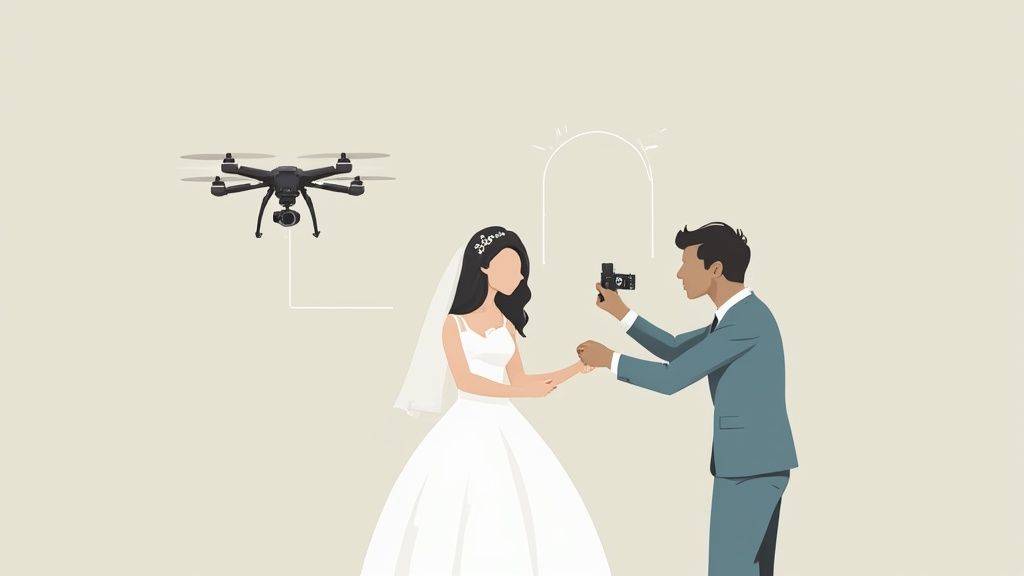
Alright, you’ve navigated the rules and sorted out the logistics. Now for the fun part. Using a drone for wedding photography is where your technical skill and creative vision really come together, letting you craft images that are just plain impossible from the ground. It’s not about just throwing a drone in the air; it's about flying with intent to capture those iconic, movie-like moments that will anchor the entire wedding gallery.
Having a solid shot list is your secret weapon for consistency and creativity. Think of it as a playbook that ensures you nail the essential perspectives while still leaving plenty of room to capture those spontaneous, magic moments that just happen.
Let's break down a few powerful shots you can add to your toolkit.
The Epic Venue Reveal
This is your opening scene, the cinematic equivalent of "once upon a time." It beautifully sets the stage, showing off the incredible location the couple fell in love with for their big day.
Picture this: you start low, maybe hidden behind a line of trees or a small hill, then slowly climb as you push forward. As the drone gains altitude, the full splendor of the venue—a historic castle, a modern glass ballroom, or a rustic barn tucked into a valley—unfurls before the viewer's eyes. This one shot provides context and scale, telling a much richer story than a simple photo of the front door ever could.
Best Time to Shoot: Early in the day as guests trickle in, or during the golden hour when the light turns soft and dramatic.
Pro Tip: Keep the ascent slow and steady. You're going for a graceful, sweeping motion that feels luxurious and intentional, not a quick, jerky movement.
The Symmetrical Top-Down Group Shot
Ah, the dreaded large group photo. It’s a challenge every wedding photographer faces. Trying to herd dozens of guests onto stairs or squish everyone into a tight frame can feel like a logistical nightmare. This is where your drone becomes an absolute game-changer.
From a bird's-eye view, you can arrange the entire wedding party—or even all the guests—into creative shapes like a heart, interlocking circles, or the couple's initials. The result? A perfectly symmetrical, visually stunning image that’s both fun and totally unique. You’ve just turned a standard photo-op into a piece of art that captures the collective joy of the day.
This shot isn’t just a photo; it’s a memorable experience for the guests. It’s one of the most requested drone shots out there for a reason—it has massive impact and is incredibly shareable.
The Romantic Orbit
When it’s time for the couple’s portrait session, the orbit shot adds a breathtaking, dynamic layer to their intimate moments. The technique is simple in concept: fly the drone in a smooth, perfect circle around the couple, keeping the camera locked on them the entire time.
As the drone circles, the background glides by, creating a sense of movement and romance that feels like it was lifted straight from a film. Whether they're standing on a dramatic cliffside, in an open field, or on a private dock, the orbit shot isolates them in their environment, putting all the focus on their connection and the beauty of their surroundings. To elevate your visuals even further, photographers can explore advanced techniques like AI image and video style transfer to create truly unique aesthetics.
The "Journey" or Walk and Talk
This shot is perfect for capturing the couple as they take a private stroll together. By flying the drone either in front of them (tracking backward) or trailing behind them, you create a sense of movement and story.
This approach is fantastic for showcasing a sprawling landscape and making the couple feel like they’re the only two people in the world. It’s less about a static pose and more about capturing a natural, unscripted moment of connection as they walk through a beautiful setting. The gentle motion gives it a narrative feel, as if we're following them on the very beginning of their new journey together.
For a deeper dive into more flight maneuvers, check out our guide covering 8 essential aerial photography techniques for 2025. Getting these foundational shots down will give you a strong creative base, allowing you to deliver consistently incredible results that make your wedding packages stand out from the crowd.
Integrating Aerial Footage into Your Final Wedding Package
Nailing those incredible aerial shots is a massive win, but the real magic happens in post-production. This is where you weave that epic footage into the final wedding story. Great drone content can't feel like an afterthought; it needs to be an essential, seamless part of the entire narrative, blending sky-high perspectives with intimate, ground-level moments.
The first hurdle is usually achieving a consistent look and feel. The camera sensor and color science on your drone will almost certainly be different from your main cameras, which makes skillful color grading non-negotiable. Your goal is to make it all look like it was shot by the same artist with the same vision.
Creating a Seamless Visual Language
Think of color grading as the glue that holds the entire wedding album and video together. Jarring shifts in color or tone can yank the viewer right out of the moment. By applying a consistent color palette, you create a smooth, professional flow from that wide, sweeping shot of the venue down to a tight close-up during the vows.
Using the right software is crucial here. For a deep dive into the tools the pros rely on, check out our guide on the [best drone video editing software picks for 2025](https://www.jabdrone.com/post/best-drone-video-editing-software-top-8-picks-2025). This isn't just a technical fix; it's about setting the emotional tone for the whole story.
Strategically Weaving in Aerial Clips
Once your footage is color-matched, it's all about strategic placement. The last thing you want to do is dump all your drone shots at the beginning of the video. Instead, you need to sprinkle them in to add emotional weight and give the film a solid structure.
Establishing Shots: An opening aerial clip is the perfect way to set the scene and show off the venue.
Powerful Transitions: A sweeping drone shot can act as a beautiful bridge between different parts of the day, like moving from the ceremony to the reception.
Emotional High Points: A slow, majestic orbit around the couple during their portrait session can dial up the romance and grandeur of that moment.
By placing these aerial moments thoughtfully, you create a rhythm that guides the viewer through the day’s emotions. A well-placed drone shot provides a breathtaking pause, making the intimate ground-level shots that follow feel even more personal and impactful.
This rising demand for unique, cinematic storytelling is fueling some serious market growth. The global drone wedding photography market is expanding, driven by couples looking for something special, particularly for destination weddings. Smart photographers are building entire offerings around this trend, integrating breathtaking aerial views into their packages.
Packaging and Pricing Your Drone Services
Figuring out how to package your drone services is key to boosting your bottom line while showing clear value to your clients. A one-size-fits-all approach just won't cut it. Instead, build out tiered packages that cater to different needs and budgets.
Here are a few proven structures:
The Aerial Photo Add-On: This is your simple, entry-level option. Offer 5-10 professionally edited, high-resolution aerial photos of the venue and key moments like the big group shot.
The Cinematic Highlight Reel: This mid-tier package includes the photos plus a short, 60-90 second edited video reel. It features the best drone clips set to music—perfect for them to share on social media.
The Fully Integrated Film: This is your premium offering. Here, you seamlessly integrate drone footage throughout the entire wedding film, using it for establishing shots, transitions, and those epic storytelling moments.
Once you’ve got your final product ready, knowing how to show it off is the next step. You can get some great ideas by exploring strategies for [mastering video marketing for social media](https://postsyncer.com/blog/video-marketing-for-social-media) to get your work in front of more people. When you present your drone for wedding photography services clearly and professionally, you empower couples to pick the option that best fits their dream, ensuring you deliver a final product that truly takes their breath away.
Got Questions About Drone Wedding Photography? We Have Answers.
Thinking about adding a drone to capture your wedding day? You probably have a lot of questions. That’s completely normal. It’s a unique skill that blends high-tech flying with creative artistry, and there are some important things to know. Getting the key concerns sorted out ahead of time is the best way to manage expectations and make sure everything goes off without a hitch.
Let’s dive into the most common questions we hear from both couples and photographers to clear up the confusion around using a drone for wedding photography.
Is It Safe to Fly a Drone at a Wedding?
This is always the first question, and for good reason. The short answer is yes—but only when a qualified professional is in control. For an experienced pilot, safety isn't just a priority; it's everything. They operate under a strict set of rules designed to keep everyone at your wedding completely safe.
A core rule of thumb is to never fly the drone directly over guests. A pro will always keep a safe distance, using zoom lenses or smart positioning to get those incredible shots without ever putting anyone at risk. Plus, modern drones are packed with sophisticated obstacle avoidance sensors. Think of them as a second set of eyes, constantly scanning for trees, buildings, or anything else that could get in the way.
True professionalism in the world of drone photography is defined by one thing above all else: an unwavering commitment to safety. This means having the right insurance, doing a detailed site survey before the wedding, and coordinating every flight with the venue and wedding planner.
What Happens If There Is Bad Weather?
Drones and bad weather are a terrible mix. High winds, rain, or snow make flying unsafe and, frankly, impossible. A true professional will never take a chance in poor conditions, which is why having a solid backup plan is so important.
This "what if" plan should be clearly spelled out in your contract long before the wedding day. It’s the best way to manage expectations and avoid any last-minute stress.
Here are a few common bad-weather policies:
Service Credit: You could apply the cost of the drone service toward something else, like a bigger wedding album or extra prints.
Post-Wedding Shoot: Another great option is to schedule a separate aerial session at the venue on a sunny day to capture those jaw-dropping shots of the location with just the two of you.
Partial Refund: A simple refund for the drone portion of the photography package is also a common solution.
Discussing this upfront is a sign of a real professional. It shows they have a plan B ready to go, protecting both their business and your investment.
How Much Does Drone Wedding Photography Cost?
The cost to add aerial shots to a wedding package can really vary. It's usually offered as an add-on service, with prices running anywhere from a few hundred to over a thousand dollars. That price tag isn't just for the time the drone is in the air; it covers a whole bundle of expertise, equipment, and final products.
Several things influence the final cost:
Pilot Expertise: A seasoned, certified pilot with a killer wedding portfolio is going to charge more than someone just starting out. You're paying for experience.
Equipment Quality: Using a top-tier drone with a superior camera, like the DJI Mavic 3 Pro, costs more but delivers images that are worlds apart in quality.
Coverage Time: How long the drone is flying and how many specific shots you want will naturally affect the price.
Final Deliverables: Are you getting a handful of high-resolution photos? A short cinematic video? Or will the footage be woven into your main wedding film?
At the end of the day, the fee covers the pilot's certification, liability insurance, high-end gear, and the massive artistic value that only a bird's-eye view can bring to your wedding story.
Do I Need Permission from the Venue?
Yes. Absolutely. 100%. This is a big one and it's not negotiable. Getting clear, written permission from your wedding venue is one of the first things you need to do. You can't just have your photographer show up and launch a drone.
Many venues have their own rules about drone operations. Some might even have a strict no-drone policy for good reasons, such as:
Proximity to Airports: If the venue is in controlled airspace, there are legal flight restrictions that can't be bypassed.
Guest Privacy: High-end resorts or private estates often have policies to protect the privacy of everyone on the property.
Historic Preservation: Venues with historic buildings or delicate landscapes may ban drones to avoid any risk of damage.
It’s the photographer's job, working with you, to contact the venue manager far in advance. Confirming their policy and providing proof of insurance and certification are must-do steps to make sure you get those amazing aerial shots without any last-minute drama.
At JAB Drone, we're committed to providing the insights and knowledge you need to excel in the world of aerial photography. For more expert guides, reviews, and industry news, explore our resources at https://www.jabdrone.com.
Comments